
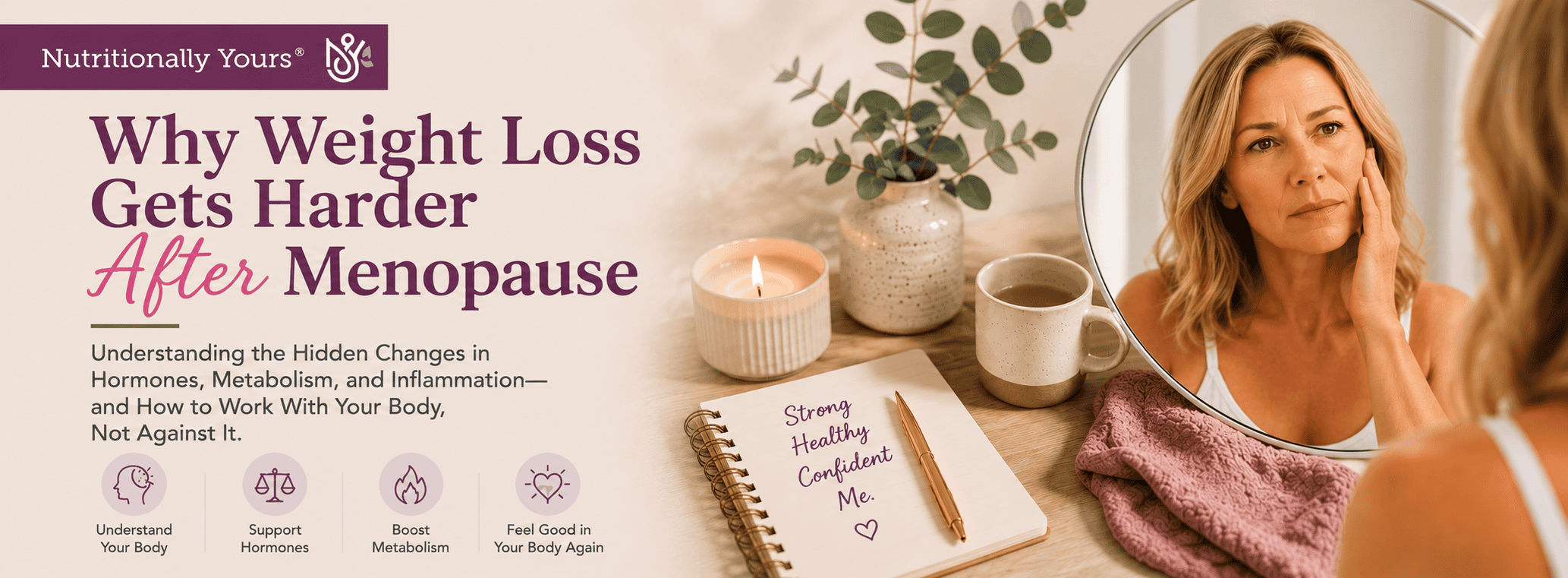
If you are struggling with weight loss after menopause, you are not alone. Many women over 40 feel like their body no longer responds the way it used to. I hear you my friend.
Many women tell me:
“I barely eat and still gain weight.”
“I feel inflamed all the time.”
“My stomach changed overnight.”
“I do not even recognize my body anymore.”
And honestly, I understand that feeling deeply. The same thing happened to me.
Not too long ago, I gained what I call my “menopause 30.”
Even as a holistic nutritionist, I had to stop and really listen to my own body, hormones, stress levels, sleep, metabolism, and inflammation patterns.
What worked years ago in my 20s and 30s no longer worked for me. Not fair and definately not nice.
I had to stop listening to every trend, every opinion, every diet, and every “one size fits all” plan being pushed online and by reps coming into my clinic.
Instead, I learned something important:
The body after 40 requires a more personalized approach. Weight loss after menopause requires a completely different strategy than what worked in your 30s. Weight loss after menopause is not about eating less. It is about understanding what your body actually needs right now.
And thankfully, I did lose the weight. Dropped 30 pounds in a few months. Phew. A big relief.
But more importantly, I learned how to keep it off in a realistic, healthy, sustainable way.
Why Weight Loss Changes After 40
One of the biggest misconceptions women hear is:
“You just need to eat less and move more.” Nope I say.
But many women over 40 are already eating less and starving themselves.
The issue is often deeper than calories in calories out. (not one of my favorite sayings!)
As women move through perimenopause and menopause, the body experiences major hormonal and metabolic shifts that can affect:
- Fat storage
- Insulin sensitivity
- Muscle mass
- Sleep quality
- Cortisol levels
- Hunger signals
- Energy production
- Inflammation
- Water retention
This is why many women notice:
- More belly fat
- Puffiness
- Slower metabolism
- Cravings
- Fatigue
- Difficulty building muscle
- Increased inflammation
- Weight gain around the midsection
Your body is changing internally, not simply externally.
Hormones Affect Weight Loss After Menopause More Than Most Women Realize
Hormones influence nearly every system in the body.
When estrogen and progesterone begin shifting, many women notice:
- Increased abdominal weight
- Poor sleep
- Anxiety
- Depression
- Hair loss
- Brain fog
- Nighttime cravings
- Blood sugar swings
- Hot flashes
- Fluid retention
- Mood changes
- Exhaustion
Stress hormones like cortisol also become incredibly important during this phase of life.
High cortisol levels from chronic stress, poor sleep, over-exercising, under-eating, or emotional overload may contribute to:
- Stubborn belly fat
- Increased inflammation
- Fatigue
- Muscle breakdown
- Slower recovery
- Blood sugar imbalance
This is why many women feel frustrated when they are “doing everything right” but still not seeing results. For many women, weight loss after menopause requires a completely different strategy than what worked in their 30s.
Why Crash Diets Often Backfire After Menopause
Many women become more restrictive after gaining weight. I don’t blame you but this is not the best idea.
Unfortunately, this can make things worse for you.
The body after 40 often needs:
- More nourishment
- Better lean protein intake
- Blood sugar stability
- Muscle support
- Nervous system regulation
- Anti-inflammatory support
Not punishment.
Extreme dieting can increase stress on the body and may worsen:
- Fatigue
- Cortisol imbalance
- Muscle loss
- Cravings
- Metabolic slowdown
- Hormonal stress
One of the biggest shifts I personally had to make was understanding that starving myself was not the answer.
Supporting the body properly was.
Inflammation and Weight Gain Often Go Together
Many women over 40 do not simply feel overweight.
They feel inflamed.
Puffy.
Swollen.
Uncomfortable.
Heavy.
They wake up feeling like their entire body is retaining fluid and stress.
This is where metabolic inflammation can play a major role.
Inflammation may affect:
- Insulin signaling
- Fat burning
- Water retention
- Appetite regulation
- Energy
- Joint comfort
- Sleep
- Cognitive ability – mental clarity
- Hormonal balance
This is also why many women feel discouraged when traditional diets fail.
The issue may not just be food quantity.
It may involve inflammation, stress, hormones, nervous system overload, poor sleep, and blood sugar imbalance working together.
Personalized Weight Loss Matters More After 40
This is one reason I believe strongly in personalized wellness plans.
What works beautifully for one woman may completely fail another.
Some women need:
- Better blood sugar support
- More protein
- Hormone support
- Nervous system regulation
- Gut healing
- Anti-inflammatory nutrition
- Sleep improvement
- Cortisol support
- Comprehensive lab testing
Others may be overtraining, under-eating, sleeping poorly, or missing key nutritional needs.
There is no single perfect plan for every woman.
The body deserves to be understood individually.
My Own Journey Changed How I Help Women
Going through my own menopause weight gain gave me an even deeper level of compassion for women struggling.
I know how discouraging it feels to:
- Try hard and not see results
- Feel uncomfortable in your clothes
- Feel inflamed and exhausted
- Watch your body change
- Wonder what happened to your metabolism
But I also learned something encouraging:
Your body can improve when you begin working with it instead of against it.
That often starts by listening to your body instead of constantly fighting it.
Small Changes Often Lead to Big Improvements
Many women think they need to completely overhaul their lives overnight.
Usually, that is not necessary.
Often, steady improvements in:
- Protein intake
- Sleep
- Blood sugar balance
- Inflammation support
- Stress reduction
- Movement
- Hydration
- Nervous system health
- Hormonal balance
can create significant changes over time.
The goal is not perfection.
The goal is helping women feel strong, energized, comfortable, and confident again. If you are searching for support with weight loss after menopause, you do not have to figure this out alone.
Final Thoughts on Menopause Weight Gain and Metabolism
If weight loss feels harder after menopause, please know this:
You are not lazy.
You are not broken.
And your body is not working against you for no reason.
Women over 40 often need a more personalized, supportive approach that takes hormones, inflammation, metabolism, stress, and overall health into consideration.
Sometimes the answer is not doing more.
Sometimes it is understanding the body better.
And that can change everything.