
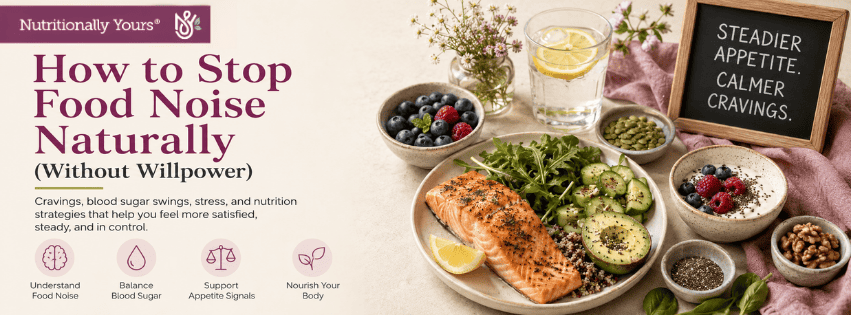
stop food noise naturally,how to reduce food cravings naturally

If you feel like your brain is constantly thinking about food…
You’re not alone.

And more importantly—
👉 it’s not a willpower problem.

This is something I see every single day in my practice, especially with women over 40. I have battled it too. 

What “Food Noise” Really Means


Food noise isn’t just hunger

It’s:

  • thinking about your next meal when you just ate
  • craving sugar or carbs even when you’re full
  • feeling like food is always “calling your name”
  • struggling to feel satisfied with food

This is often a signal issue, not a discipline issue.

👉 If you haven’t read my full breakdown yet, start here: “Food Noise in Midlife” 

Why Food Noise Happens (Especially After 40)

This is where things shift—and why so many women feel frustrated.

Food noise is often tied to:

1. Hormone Changes

As hormones shift in midlife, appetite signaling becomes less stable and inflammation tends to rise up. 

You may notice:

2. Blood Sugar Swings

Skipping meals or eating too many quick carbs can create a cycle of:

  • spikes
  • crashes
  • cravings

3. Low Protein Intake

This is a big one in my office.

👉 Protein is non-negotiable

Without enough protein, your brain never gets the signal that you’re full.

4. Stress + Poor Sleep

When stress is high and sleep is off:

  • cortisol rises
  • hunger signals increase
  • cravings feel stronger

How to Stop Food Noise Naturally

This is where we shift from frustration → control.

Not by forcing willpower…
But by supporting your body’s signals.

1. Start Your Day with Protein

This is one of the simplest, most powerful changes.

Aim for:

  • 25–30 grams of protein in the morning

This helps:

  • stabilize blood sugar
  • reduce cravings later in the day
  • improve energy and focus

2. Eat Consistently (Don’t Skip Meals)

Skipping meals might seem helpful… but it often backfires.

Your body becomes:

  • more reactive
  • more hungry
  • more prone to cravings

3. Balance Blood Sugar

Focus on meals that include:

  • lean protein
  • vegetables
  • healthy fats (in moderation)

This keeps signals steady instead of chaotic.

4. Support Sleep + Stress

This is often overlooked.

Better sleep = better appetite control
Lower stress = quieter food signals

5. Look Deeper (This is where most people get stuck)

Here’s the truth most people don’t hear:

👉 If food noise isn’t improving… there’s usually something deeper going on.

This could include:

This is why I always say:

👉 We test. We don’t guess.

Where GLP-1 Fits In (A Supportive Role)

GLP-1 is a hormone your body already makes that helps regulate:

  • appetite
  • fullness
  • blood sugar

When these signals are supported properly, many women notice:

  • less constant thinking about food
  • easier portion control
  • more stable energy

👉 If you want to understand this deeper, read: Why GLP-1 Signals Matter for Metabolic Health” 

This Is About Signals, Not Willpower

You don’t need more restriction.
You don’t need more discipline.

You need:

  • better signals
  • better support
  • and a plan that fits your body

Ready to Feel More in Control Around Food?

This is exactly what I help women and men of all ages do every day.

Not through extremes.
Not through guessing.

👉 Through personalized, root-cause support.

If you’re ready to:

  • quiet the constant food thoughts
  • feel satisfied again
  • and finally understand what your body needs